

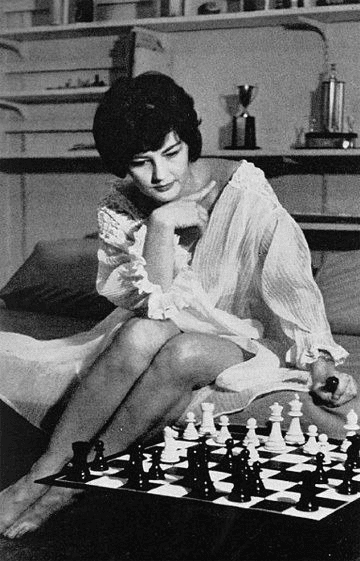
American chess champion Marianne Elizabeth Lane Hickey, AKA Lisa Lane, was born in Philadelphia in 1938. Print sports publications once called her the first beautiful chess player. Although beauty is subjective, the fact is that most of her predecessors and contemporaries who had outstanding achievements in the sport, according to the media, were not distinguished precisely by their looks. Why didn’t charm and intelligence ensure that Lisa Lane devoted her life to sports? Visit the Philadelphianka website to find out.
From depression to chess
Biographers say Lisa never knew her father’s attention. While her mother worked two jobs to support her daughters, Lisa and her sister were cared for by neighbors or their grandmother. The young woman was receiving her education at Temple University. In 1957, while driving her mother’s car, a student hit a senior woman. The victim died, but for unknown reasons, no charges were filed against Lisa. But such a tragedy further drove Lisa into the depression she was in after breaking up with her loved one.
It was during a period of severe depression that 19-year-old Lisa started playing chess in the city’s coffee shops. She later recalled that the game inspired her because she was constantly winning. It is said that Lisa Lane took chess lessons from Master Attilio Di Camillo, among others. Be that as it may, good natural ability, passion and champion character, backed up by studies, brought her victory in the championship of her native Philadelphia in 1959. The first championship of her native country was won by Lisa Lane two years after she took an interest in playing chess at the age of 21, without even being a Master of Sports. The chess player held this solid title for four years – until 1962. In 1963, Lisa Lane opened her own chess club in New York.
Oh, that Fischer!
Lisa Lane was married twice. Between 1959 and 1961, she lived with a Philadelphia man named Walter Rich, a commercial advertising executive. However, their relationship did not work out. In 1961, Lisa Lane married Neil Hickey, a journalist. Interestingly, the pair were friends with the prominent American chess player Bobby Fischer. It is worth saying that Robert James Fischer has been called the most outstanding chess player of all time in professional circles. Bobby was a chess prodigy who became the United States Champion at the age of 14. At 15, he was the youngest grandmaster back then and the youngest player in the World Chess Championship Candidates Tournament. But despite their friendship, Robert Fischer had absolutely no admiration for the way Lisa Lane played chess or women chess players in general. In fact, it was the other way around. He even went as far as to say, ‘They’re all fish. Lisa, you might say, is the best of the American fish’.
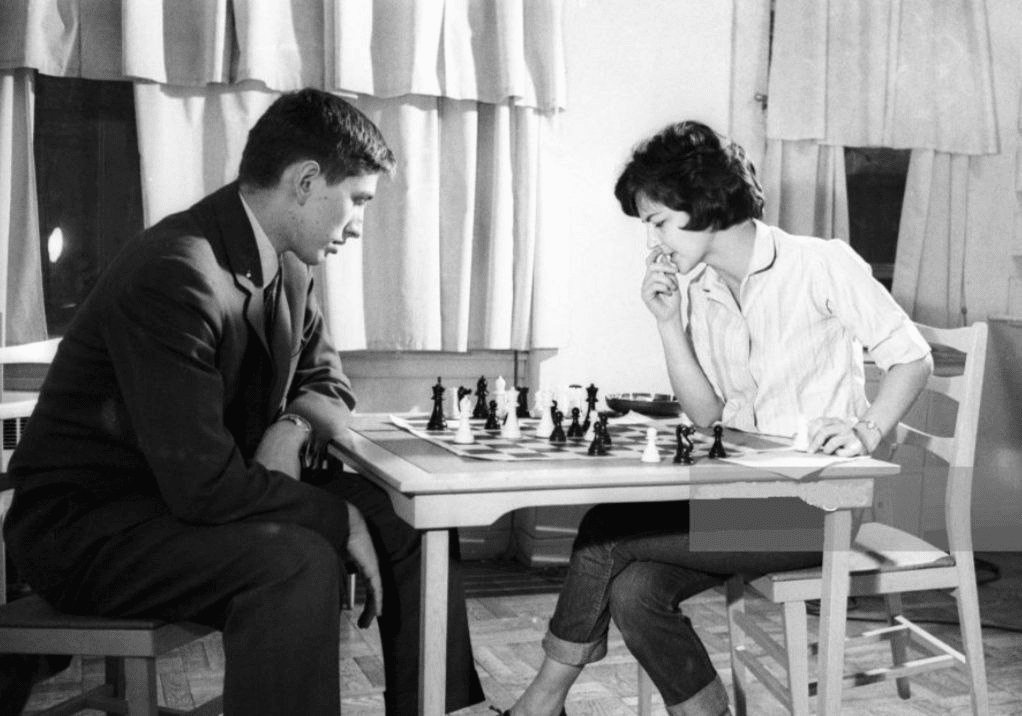
Lisa Lane and Bobby Fischer
Meanwhile, Lisa Lane once remarked that Robert Fischer was ‘probably the greatest chess player alive’.
In response, Fischer retorted unapologetically, ‘That statement is accurate, but Lisa Lane really wouldn’t be in a position to know.’
In 1962, Fisher was also “famous” for a loud sexist statement he made in an interview with Harper’s Magazine. He claimed that all women are weak, that they are stupid compared to men and that they should not play chess. He also added that women chess players are like beginners, losing every game against men and that no woman in the world could beat him.
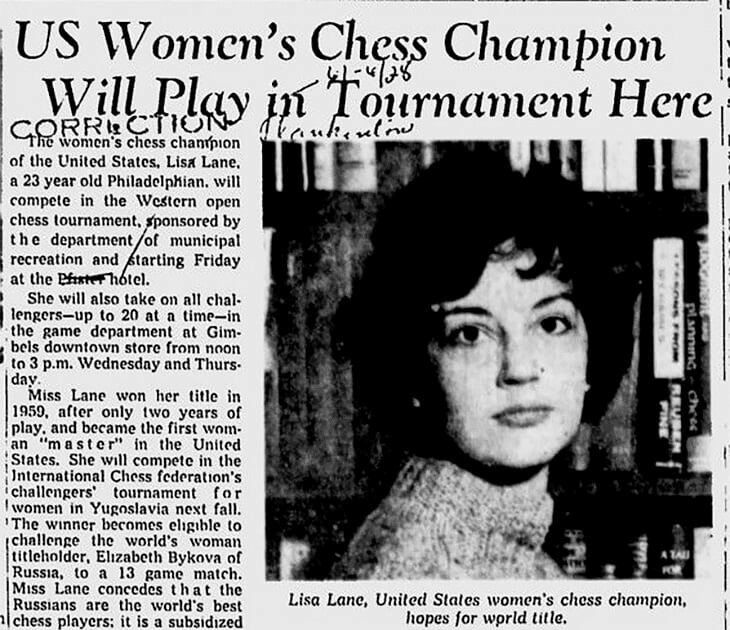
But Fisher seems to have exaggerated too much. Lisa Lane was not only a beautiful woman but also a good female chess player-strategist. For example, in 1960, she also beat a male chess player, Spencer Van Gelder. The cocktail of beauty and chess skill brought Lisa Lane fame, although she did not have a high title of Master of Sports (according to the system in force in the United States Chess Federation as of 1961, the female chess player had a weak expert rating- 2002 points).
However, it’s fair to say that Lisa Lane has participated twice in the Women’s World Championship Tournament, finishing in 12th place both times. At the same time, she successfully ended in a draw with Georgian chess player Nona Gaprindashvili (the first woman to become a Grandmaster and the first woman ever to receive this title among men, who won her first world championship in 1962 and remained on the podium for 16 years).
She didn’t like losing
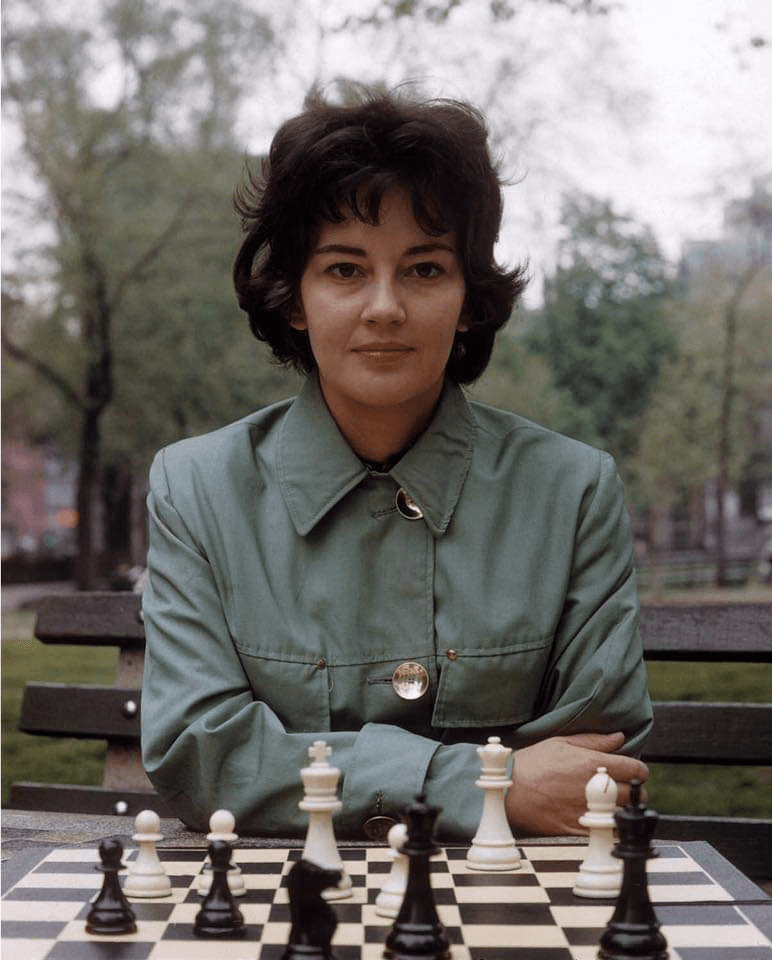
Lisa Lane, who is 85 years old today, was a beauty indeed. It is said that she was even compared to Hollywood star Marilyn Monroe in her time. Not a whole lot of photos from her sporting past have survived. They often show a brown-eyed Lisa with a pretty face, focused and determined to succeed. She was a player with a strong character who hated to lose. Once, angry at a more skillful opponent, she broke an ashtray and its shard flew toward her opponent.
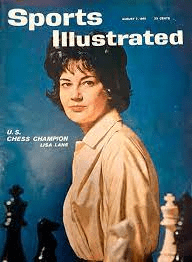
In 1961, Sports Illustrated magazine featured her photo on its cover. It was then that the famous magazine first drew attention to chess players. In general, such an honor, among other representatives of this sport besides her, fell only to Bobby Fisher (1972).
The magazine article was titled ‘Queen of Knights and Pawns’.
The author described Lane’s appearance at length at the beginning of the article and much later “remembered” that she was a female chess player. Although such an approach could be considered sexist today, Lane did not seem to be offended. Several popular publications, including Sunday Magazine, LIFE, Newsweek, and Look, have written articles about Lisa Lane. However, journalists were often more interested in her personal life than in her chess career. Thus, the woman chess player ironically remarked to one of the magazines that male chess players often write her love notes, which she “collects” by stacking them on a pile of books by grandmaster authors. During the same period, Gisela Gresser, the nine-time US champion whose appearance was considered ordinary by journalists and was hardly mentioned. So that, in general, the press was not interested in the woman as a chess player?
Why did Lane leave the sport?
It was gender discrimination that strongly influenced Lisa Lane to leave the sport. It is a known fact that in chess society, disrespectful attitudes towards women have become a kind of tradition. So, Lisa was very much affected by gender discrimination in chess. At the same time, the prejudice against people because of their appearance (i.e., lookism) actually worked in her favor because women champion chess players, in her person, nevertheless became a topic of public discussion. But it brought the woman chess player neither the treatment she deserved nor a posh life, but rather an economic hardship. During her sporting career, male chess players received good prize money, while women were generally on the losing end. As a result, the sport was often played by women who were already wealthy, had someone to lean on, or had a high-paying day job. As for Lisa Lane, she had to rent an apartment before she got married.
She was furious when she was not taken to the Chess Olympiad in Yugoslavia, although she won a ticket there, as did Gresser. The national federation had decided that only women chess players who could afford to pay their own expenses would go. However, the height of her indignation came in 1966 when she discovered that male winners of the United States Championship were paid six thousand dollars, while female winners received only six hundred dollars. Then she asked her support group to come out to the protest wearing boards that read, “One Man Is Worth Ten Women?” and “What Good Is A King Without A Queen?”.
But journalists didn’t take the gender action seriously, and neither did sports officials. Lisa won the championship, sharing first place with Gisela Fischdick. But then, tired of fighting what was silently tolerated by many women, she simply disappeared from the sport she loved, choosing instead to be with a beloved man who appreciated her.
There is also an opinion that Lisa Lane said goodbye to chess because she did not like being perceived solely as a chess player or a champion. She did not consider what she had once done in sports to be the most important thing in her life. It can be assumed that this person just strived for equality in sports and simple human happiness.