

Benjamin Rush was a controversial yet highly respected doctor of his time. Although this man had interests beyond medicine, he is often called an innovator in the field of mental health and the father of American psychiatry. How this prominent American earned that title read at philadelphianka.
Fighting mental illness was his prime interest
Benjamin Rush came from a large family. He was born in Philadelphia in 1745 to a farmer’s family. After losing one of his parents at the age of six, Benjamin still managed to obtain a good education. In particular, after developing an interest in medicine, he graduated from the University of Pennsylvania and also studied medicine in Scotland. He practiced in hospitals in London and Paris before returning to the United States.
In 1769, Rush began his medical practice in Philadelphia. He also became a professor of chemistry at the College of Philadelphia (later the University of Pennsylvania). From 1791, he taught theoretical and practical medicine and clinical practice there. Rush sought methods to combat gout, tuberculosis, dropsy and yellow fever. However, the fight against mental illnesses was always his top priority. In psychiatry, Rush used knowledge from French, English and German schools. From the first two schools, he adopted a humane approach to the mentally ill, advocating against chaining them and using physical punishment. The doctor stated that people with mental disorders are sick individuals, not animals, as was often believed.
From the German school of medicine, Rush chose the application of various devices. For example, he created a device called a gyrator for treating patients with depression or dementia. Rush believed that these ailments were caused by a lack of blood supply to the brain. Therefore, patients were strapped to a board that was spun in a circle. The patient’s head was positioned at the end of the board, away from the center of rotation. The doctor thought that in such a “centrifuge,” blood would flow to the brain, which would improve the treatment. For violent lunatics, he applied the principle of a tranquilizer. To soothe the muscles and cool the patient’s head, they were fixed in a special chair and their head was covered in ice or cold water. However, Rush was mistaken when thinking that many mental illnesses were provoked by circulatory disturbances and sensory overloads, which is why his devices had a dubious “reputation” in practice.
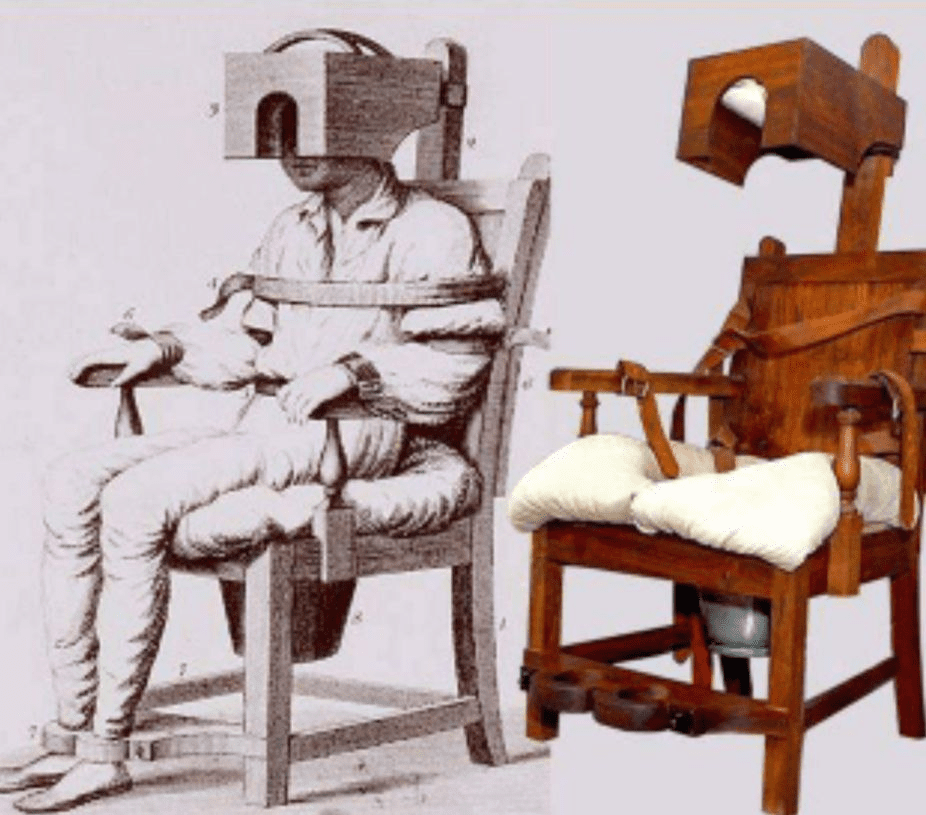
Although Rush’s devices may seem primitive, questionable and inhumane to us today, they were a kind of breakthrough compared to the methods of the colonial era, such as strapping or complete isolation of the mentally ill. When Rush was looking for ways to treat patients, he emphasized that it is a brain disorder rather than the influence of demons. The doctor was convinced that any disease is a result of an imbalance in the body and that mental ailments are caused by disorders in the brain. This belief laid the groundwork for medical research of subsequent generations. Benjamin also held the progressive viewpoint that patients should regularly engage in relaxation activities (such as gardening, sewing, exercising and listening to music). He stressed the importance of keeping the environment clean and maintaining hygiene. He demanded proper and accessible medical care for people and was the first to open a free clinic in the United States.
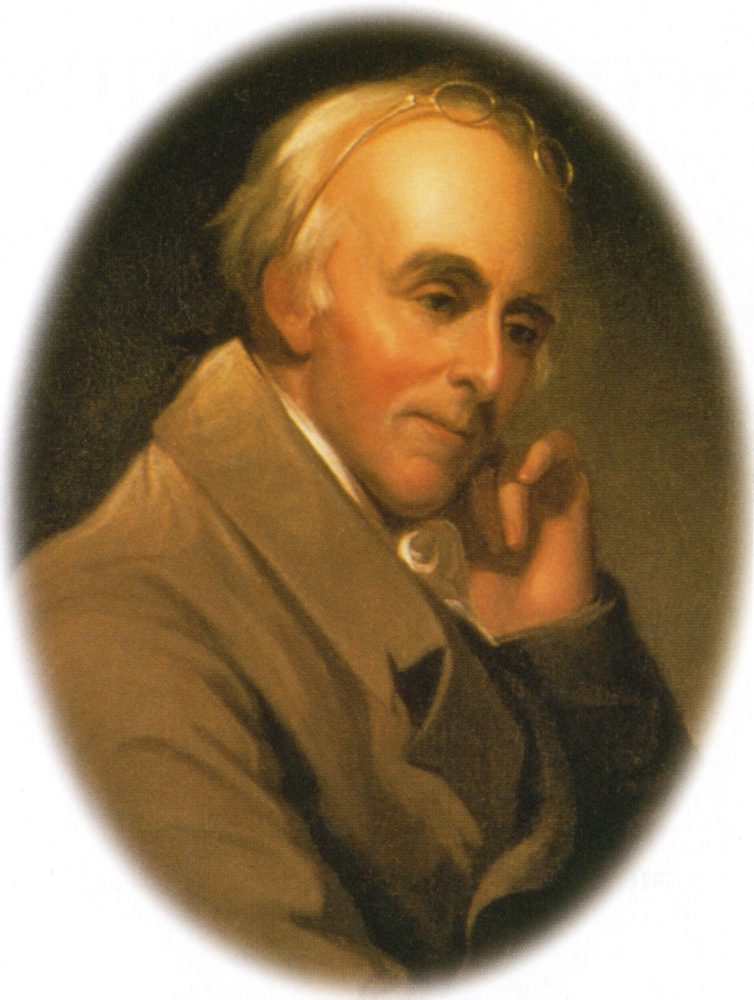
During the War of Independence, Rush served as the chief physician of the American army. He was also a surgeon in the Pennsylvania Navy and the head of a military hospital. Rush was concerned about the health of soldiers, insisting that they should have proper nutrition, clothing and living conditions so that disease would not demoralize them. He wrote a special manual on this topic. While he was serving in the army, he issued an instruction on how to keep soldiers healthy. It became a significant contribution to the foundations of preventive military medicine and was published multiple times.
Rush documented his observations of patients with mental illnesses and his efforts to treat them in a treatise that was also republished several times and regarded as a matter of national pride. Rush’s monograph, published in 1812, is considered one of the first works concerning the treatment of psychological disorders in American medicine. Additionally, Rush was the first to introduce the term “dengue fever” into medical usage while studying and describing this disease. He attempted to classify mental illnesses and describe their causes and treatment methods. Interestingly, Rush believed that aborigines do not suffer from mental disorders.
An undoubtedly sizable contribution of Benjamin Rush to medicine was the establishment of a public dispensary for poor patients in Philadelphia. He also initiated public works to drain the coastline and relocate the Dock Creek river, which helped eliminate mosquitoes that were carriers of yellow fever and other serious diseases.
Ambiguous beliefs
Besides a number of advanced beliefs, Benjamin Rush also had many unsuccessful ones that were later confuted by modern medicine. When an epidemic of yellow fever spread in Philadelphia at the end of the 18th century, thousands of people died. Many doctors left the city, but Rush stayed. In those difficult times, he managed to save several hundred patients. But bloodletting and the use of mercury powder, which the doctor often employed, were recognized by even his contemporaries as ineffective and harmful to many patients. Nevertheless, Rush believed that bloodletting, which was very popular in medicine at the time, was effective for almost any illness. He continued to believe in it long after doctors stopped using this method in practice and it was even deemed harmful. In addition, Benjamin Rush genuinely believed in cleansing the body with toxic substances. Although he acknowledged that sweating patients in a wine-acetic solution of mercury and cold baths were indeed unsuccessful procedures for those suffering from yellow fever. English journalist William Cobden even accused the doctor, saying that this treatment method killed patients. However, Rush took him to court and won the case.
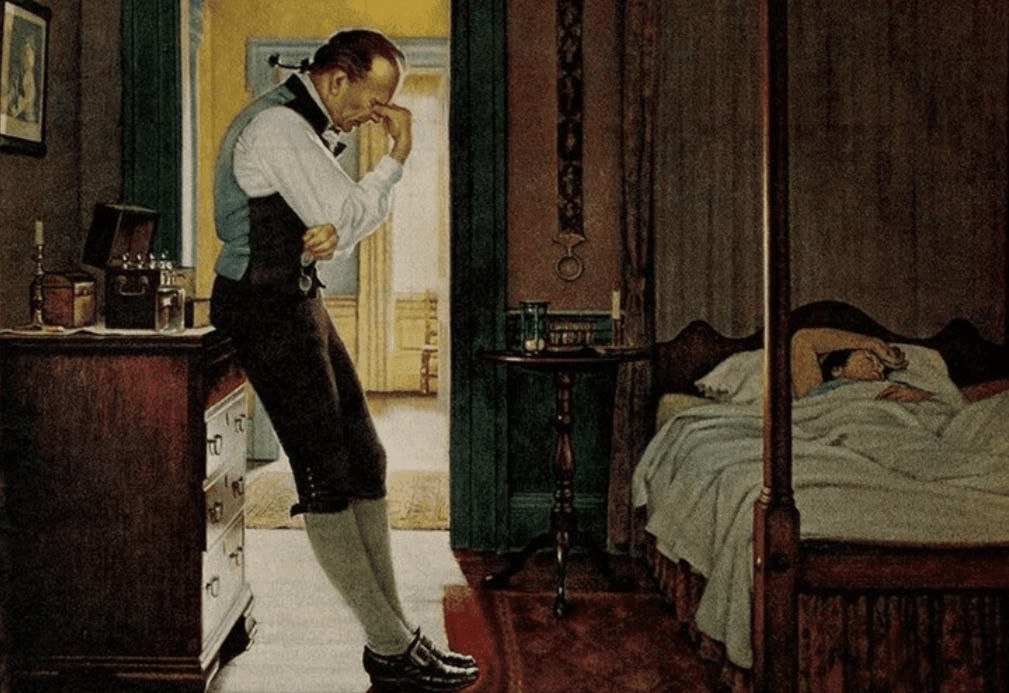
Although Benjamin believed in the effectiveness of bloodletting and toxic substances, there is evidence that he applied them only with the consent of the patients and not under coercion. It can be said that this relative humanity was one of the foundations of moral therapy in psychiatry, which later triumphed in the United States and Europe.
About other interests and personal life
Benjamin Rush is called an enlightener, philosopher and public figure. He was also involved in politics. He signed the Declaration of Independence, was a member of the Pennsylvania General Assembly and served as treasurer of the U.S. Mint. He was also a member of the American Philosophical Society and the American Academy of Arts and Sciences. In the later years of his life, he headed the Pennsylvania Medical Society. At one point, Rush spoke out against the slave trade and slavery in general. But some of his statements regarding diseases among black people were extremely wrong (for example, he considered black skin to be a form of leprosy). Despite this, the doctor insisted that African American patients are no different from white ones and therefore deserve the same treatment and rights.
Benjamin Rush had 13 children. The father of American psychiatry was painfully struck by the karma of his eldest son. The young man lost his mind because he killed a friend during a fight and then attempted to commit suicide multiple times. The father placed his son in a psychiatric hospital in Pennsylvania, where he lived for about 30 years before passing away.
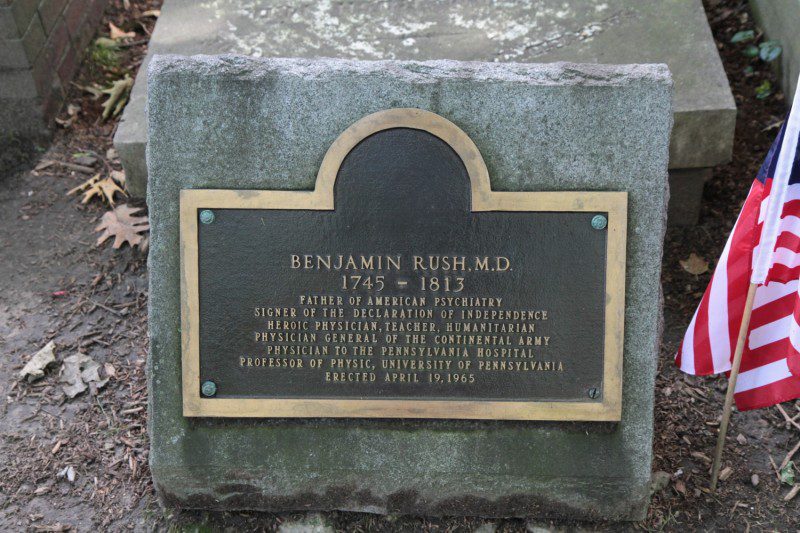
Benjamin Rush worked at Pennsylvania Hospital from 1783 until his death. He died at the age of 67 in 1813 from typhus while trying to help contain its epidemic. Despite his controversial career, particularly in medicine, Rush was the most renowned physician in the United States until the end of his life and after. He implemented a number of medical and educational reforms and greatly influenced the development of medicine in the country. He founded a college in Pennsylvania and was a founding member of the Philadelphia Society, which worked to mitigate punishments in state prisons. Throughout his career, Benjamin Rush trained several thousand students. He received several honors. The medical center in Chicago was named after him. Benjamin Rush is buried on the grounds of one of the churches in Philadelphia.