

Wedding traditions evolve, boasting unique customs in every country and region. While love is undeniably the core ingredient, weddings have always been—and remain—a joyous occasion that couples eagerly share with their closest family and friends. On philadelphianka, we’re diving into how new families celebrated their unions in 19th-century Philadelphia.
Timing and Venue for the Wedding Ceremony
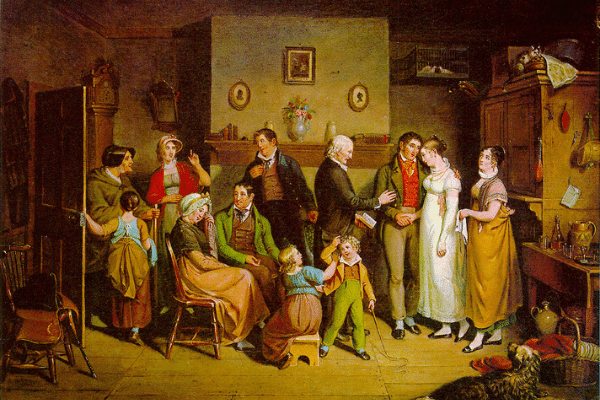
While 21st-century weddings happen year-round, two centuries ago, Philadelphians largely favored getting married in late autumn or winter. This period became the city’s prime wedding season. The reason was simple: during the colder months, most residents stayed within Philadelphia, making it convenient to gather all guests for the celebration. Spring and summer, on the other hand, saw many families traveling to other cities, so weddings were less common.
Wedding ceremonies weren’t just for weekends, either. They were quite often held on weekdays, with the traditional time being in the morning, between 10 AM and noon.
In the early 19th century, weddings typically took place in a church. However, it gradually became common to hold the ceremony at the bride’s parents’ home. This created a more intimate and personal atmosphere and eliminated the need to transport guests across the city. If the ceremony was at home, the house would be decorated with bells, horseshoes, and other symbols of prosperity and good luck. Preparations varied based on the family’s wealth, but generally, they remained quite modest, not requiring elaborate decorations.
The Bride’s Gown and Wedding Rings
One of the biggest differences in 19th-century weddings was the bride’s gown:
- White dresses were practically unheard of at the time.
- The color was impractical, and white fabrics were simply too expensive.
- Therefore, most brides wore gowns in shades of purple, blue, red, brown, or gold.
What’s more, a bride might simply wear the best dress she already owned. Having a new outfit made, especially for a single occasion, was considered unusual, and mass production didn’t exist yet. Even if a dress was new, such as a ball gown made of imported silk, it was certainly worn many times afterward.
White dresses began to grow in popularity toward the end of the 19th century. However, after the wedding, they were often re-dyed to a more practical color for everyday wear. As for the groom, he simply wore his best clothes, and that was perfectly sufficient.
Another key distinction concerned wedding rings. The tradition of exchanging rings between the bride and groom wasn’t widespread in the 19th century. Typically, during the wedding ceremony, there was only one ring—for the bride alone. It was a simple gold band, often engraved on the inside with the wedding date and the couple’s initials. The groom would present it to his beloved.
Other special decorations weren’t typically required for a 19th-century Philadelphia wedding ceremony. Despite their simplicity, these weddings were quite elegant, and guests also dressed in their finest attire.
The Wedding Party and Honeymoon
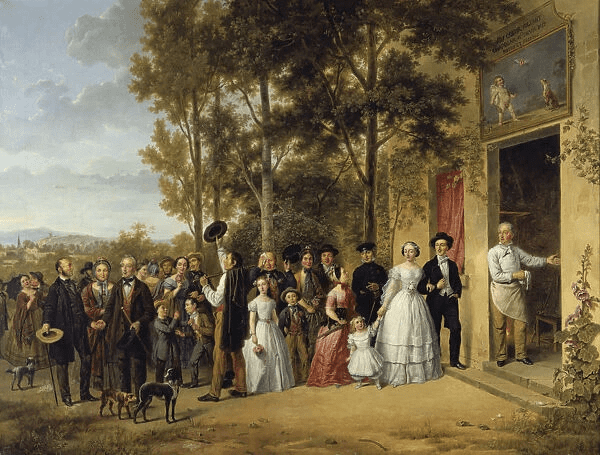
Just like in the 21st century, a 19th-century wedding wouldn’t be complete without a lively celebration. If the ceremony took place in a church, the couple would exit the building without looking around, and congratulations weren’t accepted at this time. Afterward, the bride’s parents and all other guests would follow. Together, they would head to the bride’s parents’ home, where the newlyweds would receive greetings and the party would begin.
Guests were to be treated to the best food and drinks, and dancing was a must. Wealthier families would plan weddings that lasted several days, filled with merriment. As for the feast, a top-tier menu might include soups, venison, roasted ducks and geese, cheeses, and oysters. Sides typically featured potatoes, bread, and vegetables. All of this would be washed down with spiced punch or strong cider.
A crucial element of the celebration was the wedding cake. In the 19th century, it was expected to be spiced and multi-layered. Dried fruits, nuts, and alcoholic beverages were used in its preparation, making it more akin to a fruitcake. It was sliced at the end of the party and often wrapped for guests to take home.
There was also a tradition of cutting off the top tier of the wedding cake and placing it in a jar with alcohol. It would be kept until at least the first wedding anniversary, or even longer. On the anniversary, a piece would be cut and shared, serving as a sweet reminder of their wedding day.
After the wedding ceremony concluded, the couple might embark on a wedding trip. In the early 19th century, the bride would typically bring one of her female friends along. This custom gradually faded. A friend of the groom would escort the couple and handle their luggage. Only he knew where the newlyweds were headed. Furthermore, it was considered improper to inquire about the honeymoon destination. So, guests would only see the couple off to the street, showering them with rice for prosperity and a happy life.
These were the main wedding traditions in Philadelphia during the 19th century. They evolved with time and the prevailing fashions of different years. Yet, we can see not only differences but also commonalities. A wedding has always been, and remains, a special celebratory day, filled with joy and love.